Rehydrating a Dehydrated Starter
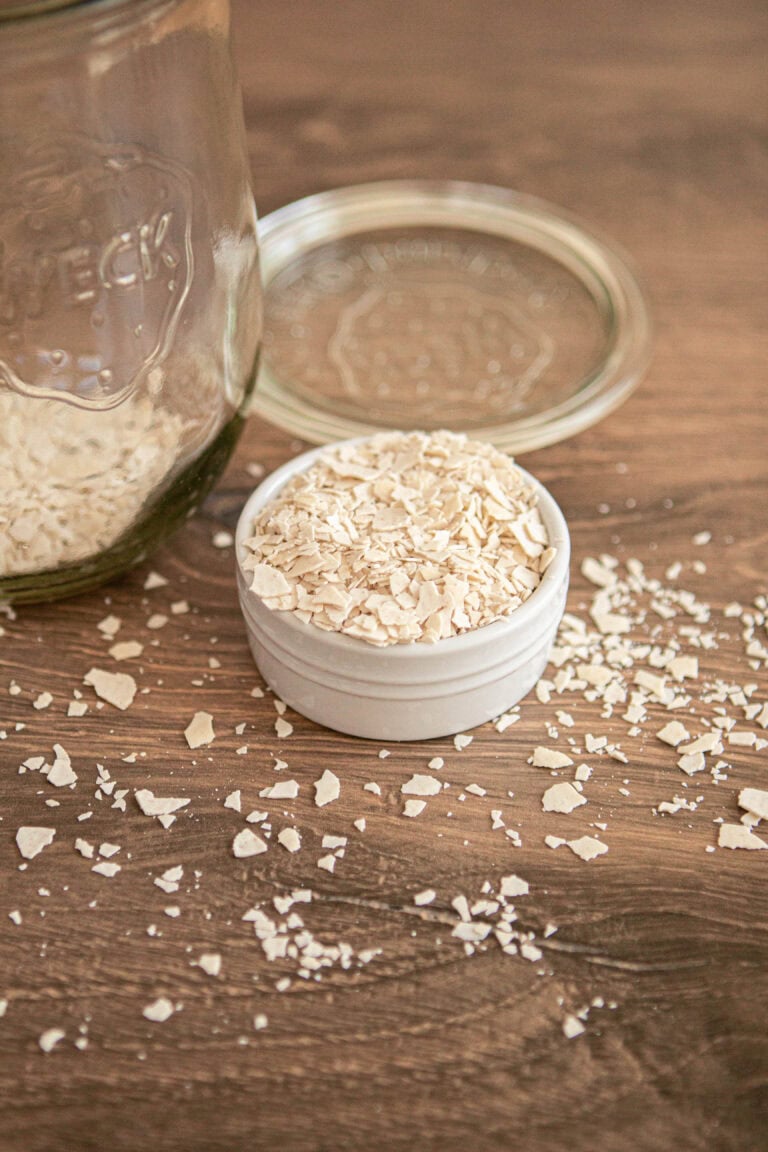
So you bought my dehydrated starter, (if you haven’t yet, you can do so below) now what? You received about 15g of dehydrated starter and now all you need is any 20oz-33oz ceramic or glass jar with a lid to get started!
Recommendations:
A warming plate– It’s not a necessity but I personally think it makes a huge difference in my starter’s activity. It’s also useful when bulk fermenting your dough.
Silicone spatula– Any kind will work but I LOVE this Figmint set of two silicone spatulas. The smaller one is perfect for sourdough starter.
Jar for discard– Once your starter is bubbly and ready, I recommend saving your discard instead of throwing it away. If you intend on baking a lot, I recommend this big jar from Target. I keep it full in my refrigerator so that I can just take a little bit from it when I’m ready to bake! More information on this strategy below.
Before Getting Started:
What flour should I use?
Unbleached works best. My personal favorites are King Arthur Unbleached and Kirkland Organic
What water should I use?
Filtered/non-chlorinated water is best for your starter!
What lid/cover should I use for my jar?
If using a Weck jar, just place the lid on top- without the seal or clamps. If using a jar with a screw-on lid, screw it on loosely. If using something that doesn’t have a lid, you can use clingwrap or a cloth jar cover.
Where should I keep the jar?
Preferably on the warming plate if it is cooler than 70 degrees inside. If you don’t have a warming plate, leave it near the stove towards the back. That way, if you cook or bake, the warmth will be near. Just NOT in the oven- it is vulnerable to being accidentally cooked… trust me, it happens to the best of us. Starters like to be warm, preferably 70-78 F.
What exactly is ‘discard’?
Discard is unfed starter you get rid of before feeding a more manageable amount. It’s important to discard the extra starter so that the amount you’re keeping to feed stays healthy and the yeast continues to grow. HOWEVER, if you really plan to keep up with your sourdough and make stuff frequently, get a jar to keep your discard in the refrigerator. Because you can literally take out 50g of the discard from your jar and feed 100g water and 100g flour 10-ish hours before you want to make something and it will be ready to bake with!
How long can I keep discard in my refrigerator?
You can keep it for 3 months or so.. Sometimes longer but if you often get mold in your fridge, there is present mold somewhere that can reach your starter. You can start keeping your starter after day 5.
Do my grams have to be exact?
Essentially yes, but if you’re off by 1-4 grams by accident, it’s really not a big deal at all.
Rehydrating your sourdough starter:
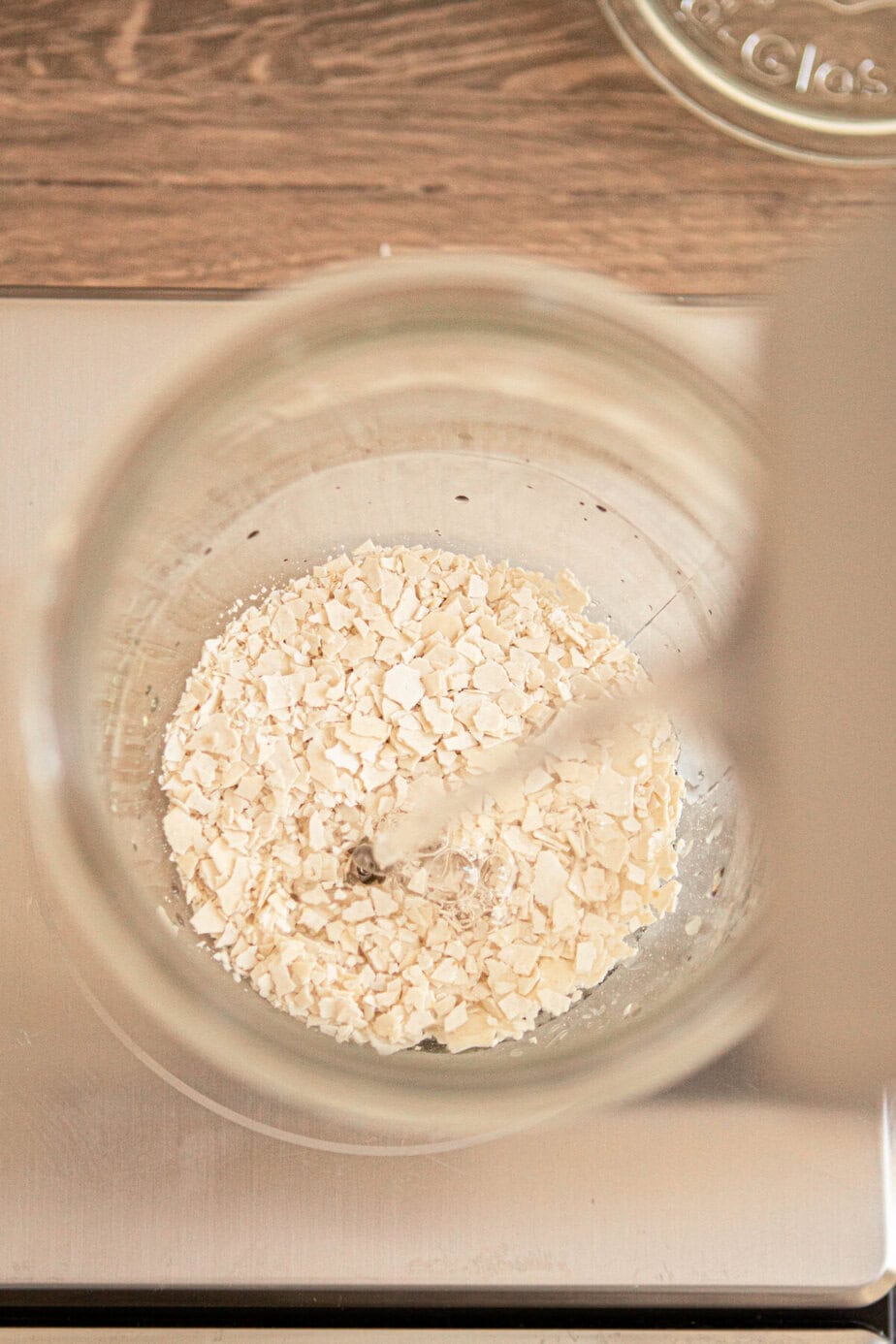
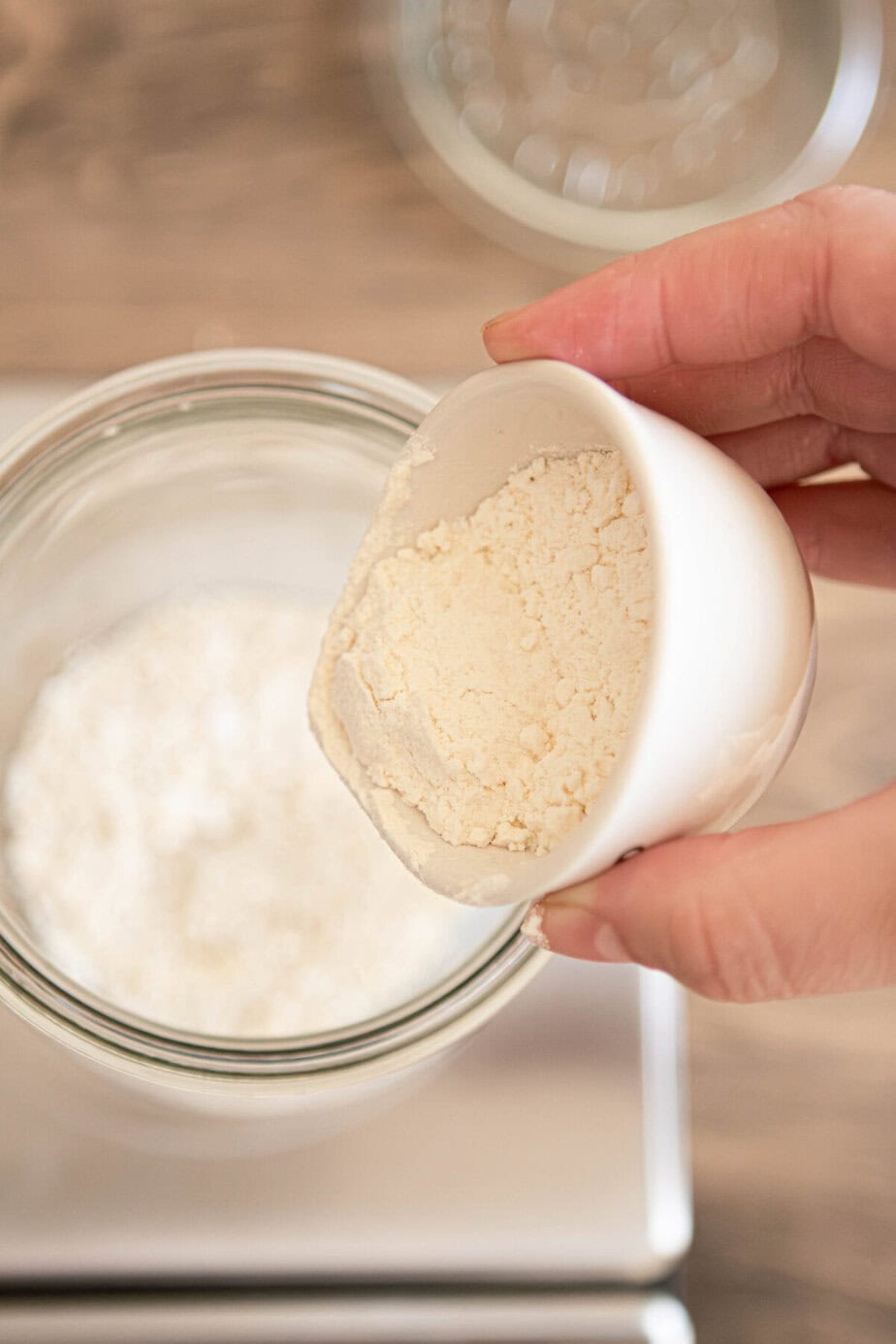
Day 1: Add 15g dehydrated starter to a clean jar. Add 30g lukewarm water and stir well. Let sit 30–60 minutes until softened then add 30g flour, stir (it can still be lumpy), cover loosely, and leave on the counter for 24 hours. You may not see much activity yet and that is totally normal.
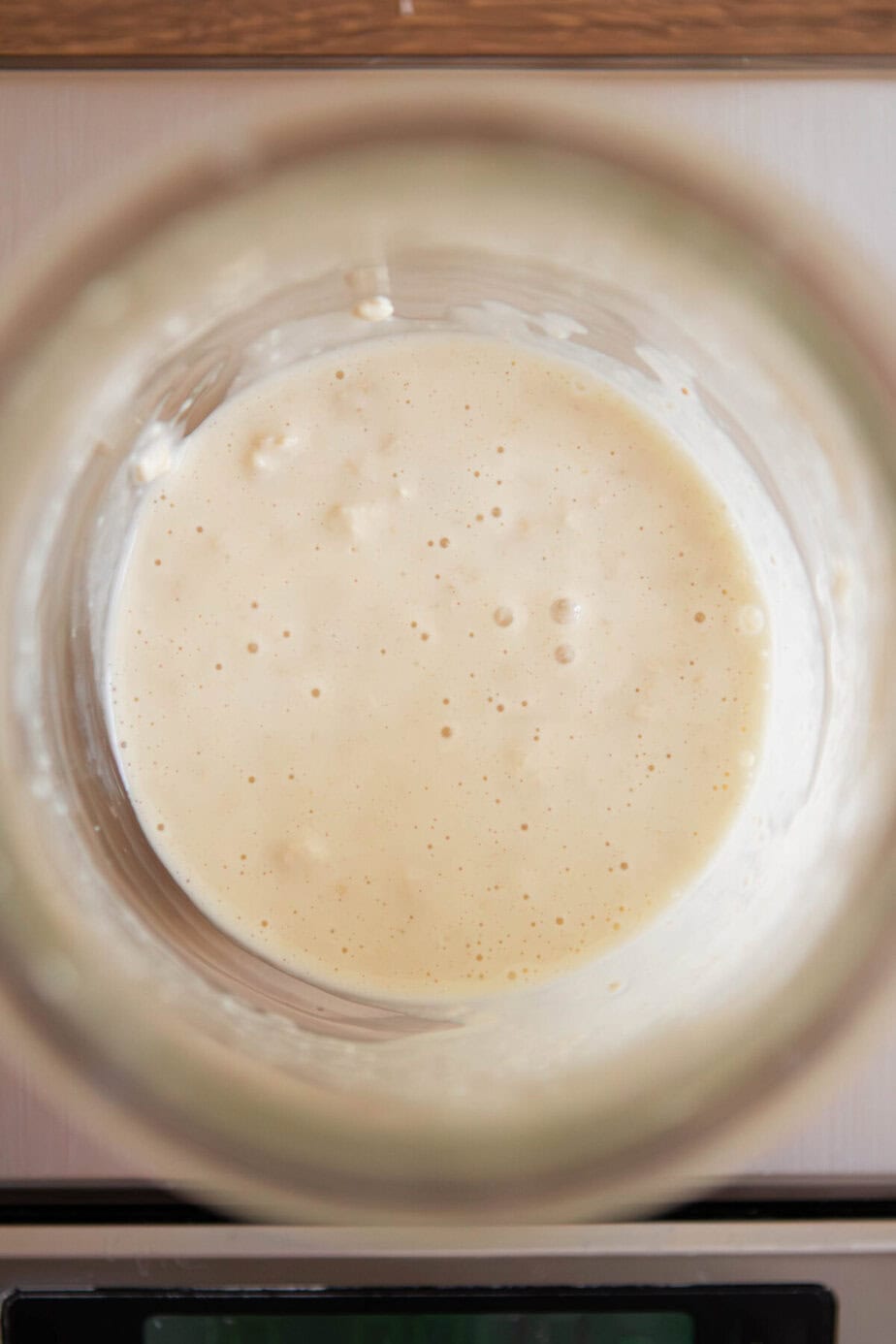
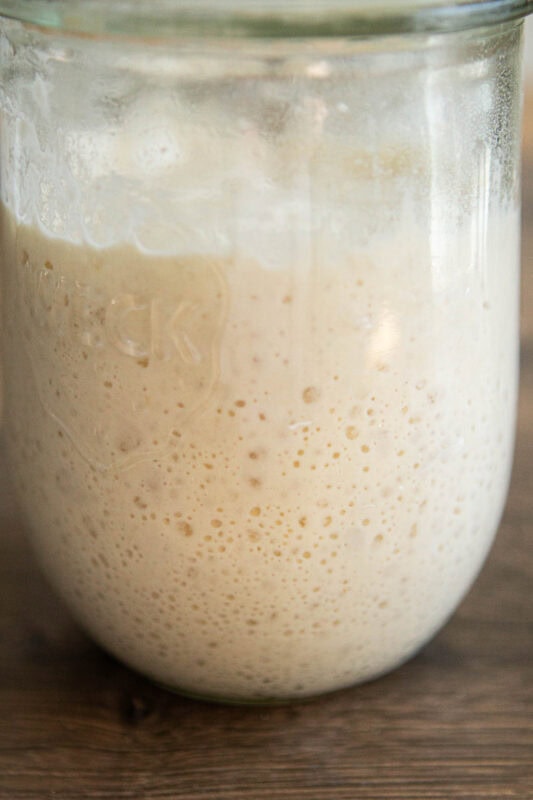
Day 2: Discard about half of the starter. Feed with 30g water and 30g flour. Stir, cover loosely, and let sit for 24 hours. You’ll start to see small bubbles as shown below and/or a light sour smell may start to appear. These bubbles show that it is active but not yet ready to use. The yeast needs to build up for your bread to rise.
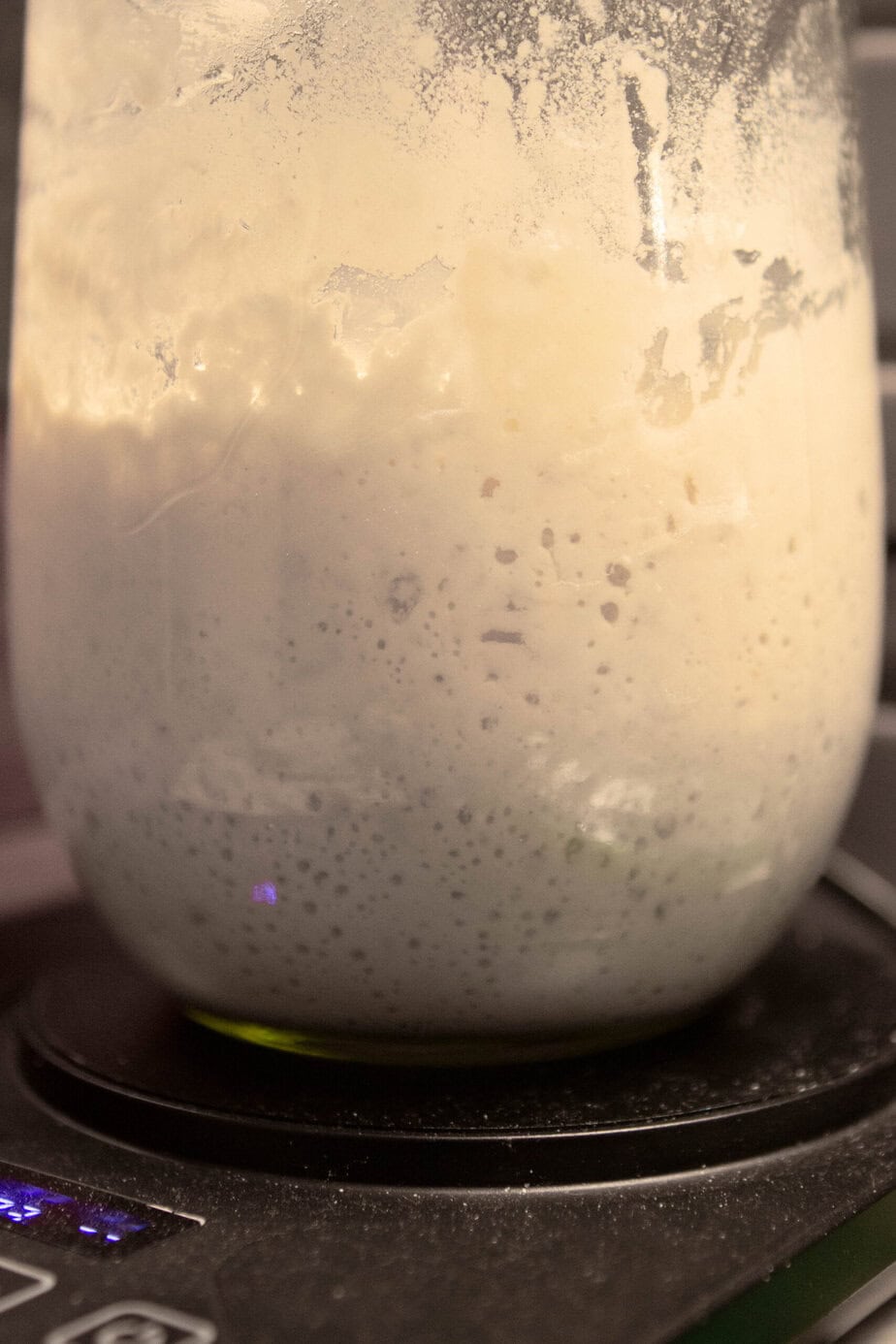
Day 3: Discard until you have about 30–40g starter left. Feed with 40g water and 40g flour, stir, and leave covered for 24 hours. The starter should look a little bubbly and smell pleasantly tangy.
Day 4: If the starter is bubbling and rising at least a little, feed twice today.
Morning: discard until you have about 30g and feed 50g water and 50g flour.
Evening: if it has fallen back down, repeat the same feeding.
Day 5: The starter is ready to bake if it doubles in size within 4–6 hours, has bubbles throughout, and smells clean and mildly sour. You may bake with it now or continue regular feedings for maintenance.
If yours is not showing the little bubbles throughout, bubbles on top, and rising about double or more, it is not ready. That is okay! Starter can be finnicky and may take some time to adapt if it’s not an environment it’s used to. Check the temperature of your home and ensure you’re using unbleached flour and filtered water. If you check those boxes, just give it time!